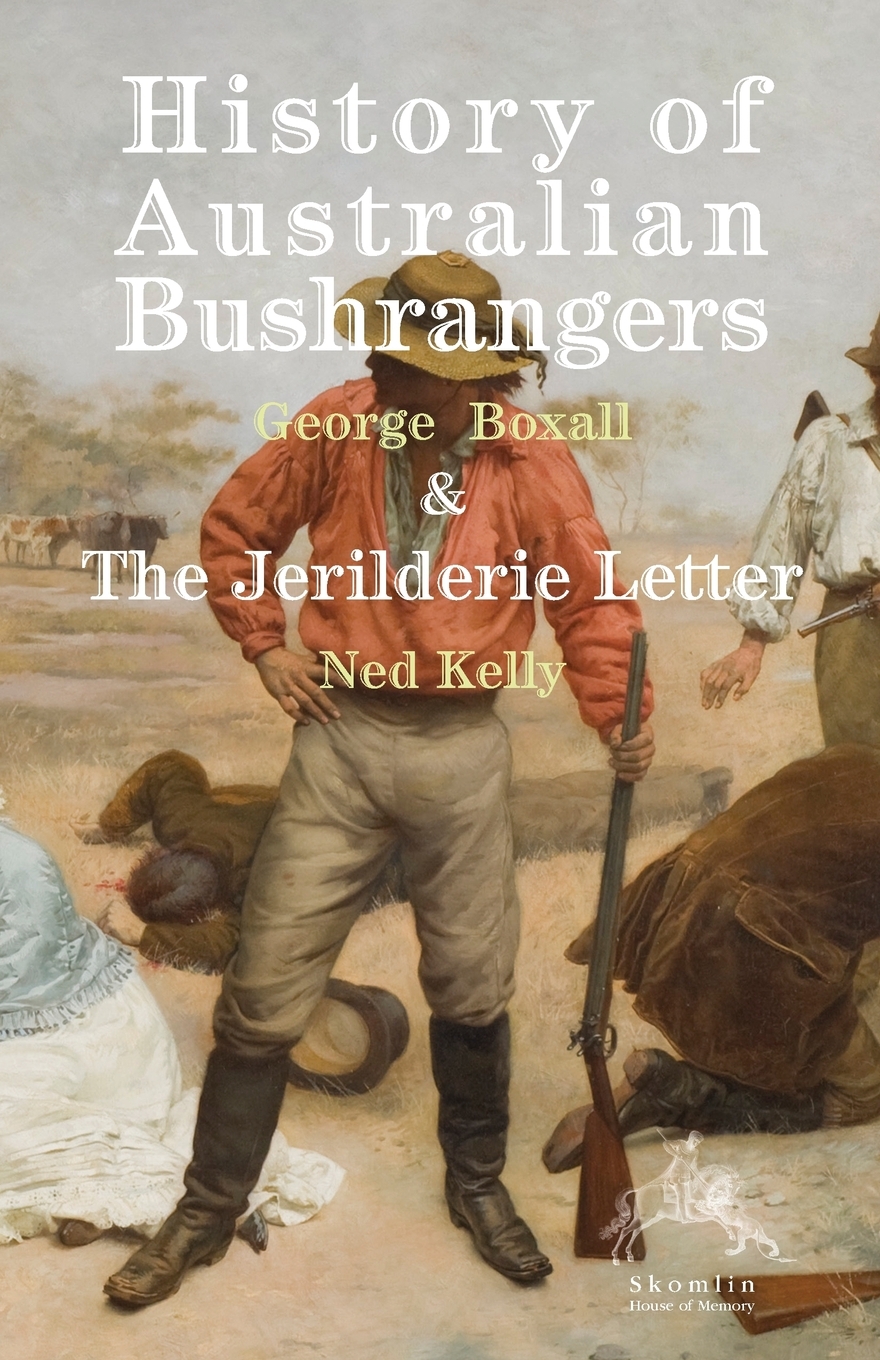
Ned Kelly
Ned Kelly was born in 1854 in Victoria, the eldest son of an Irish convict transported for pig stealing. He grew up poor in the ranges north of Melbourne, in a community of selectors — small farmers — who had little standing against squatters and less trust in the colonial police. His father died when Ned was twelve. By his mid-teens he was already known to police, apprenticed briefly to the bushranger Harry Power, and cycling through charges. A confrontation with Constable Fitzpatrick in 1878 — disputed then, disputed still — sent him and his brother Dan into the bush for good. The Kelly Gang killed 3 policemen at Stringybark Creek, robbed banks at Euroa and Jerilderie, and held a town at gunpoint at Glenrowan. Kelly walked into the troopers' rifles in homemade plate armour and was captured, tried, and hanged in Melbourne on 11 November 1880. He was 25. During the Jerilderie bank raid in February 1879, Kelly dictated a 7,500-word document to Joe Byrne and demanded it be printed in the local paper. It wasn't — not in his lifetime. The letter is a furious, vernacular indictment of the colonial system: the police who harassed his family, the squatters who held the land, and the courts that served them both. The prose is raw and run-on, built from the rhythms of spoken Irish-Australian English rather than any schoolroom model. Kelly had almost no formal education. What he produced was closer to an oral manifesto than a written text. Scholars have read it as political philosophy, as self-justification, and as literature. It remains one of the most vivid documents the colonial period produced.